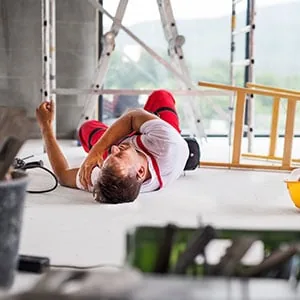
A scaffolding accident can leave a worker dealing with emergency care, missed paychecks, an unfinished jobsite investigation, and pressure to explain what happened before the facts are clear. Falls, platform failures, falling tools, unstable supports, electrical hazards, and scaffold collapses can cause injuries that change a claim very quickly.
Scaffolding accident lawyers help injured workers protect the claim while the evidence is still fresh. That can mean documenting the scaffold setup, identifying who controlled the work area, checking whether safety rules were followed, and making sure the workers' compensation claim reflects the full injury.
LTHZ Law represents injured workers in California workers' compensation claims, including serious construction injury cases involving falls, falling objects, equipment failures, and unsafe jobsite conditions.
OSHA says millions of construction workers use scaffolds, and scaffold injuries or deaths often involve planking or support giving way, a worker slipping, missing fall protection, or a worker being struck by a falling object. OSHA's scaffolding construction page frames those hazards as preventable when standards are followed.
That matters after an injury because the case is rarely about a fall alone. It may also involve who assembled the scaffold, who inspected it, whether guardrails or fall arrest systems were required, whether the platform was fully planked, whether the scaffold was overloaded, whether wheels were locked, and whether workers had safe access.
Scaffold accidents often involve height, force, and hard surfaces. Even a fall that does not look dramatic at first can lead to serious problems once pain, imaging results, or neurological symptoms develop.
LTHZ Law has separate pages for work-related back injuries, head and brain injuries, and work-related death claims when a scaffolding accident leads to those outcomes.
Scaffold evidence can disappear quickly. A platform may be moved, damaged parts may be replaced, the jobsite may change, and workers may be sent to different sites. If you are physically able, or if someone you trust can help, preserve what you can without putting yourself in danger.
OSHA's scaffold eTool lists common scaffold hazards such as falls, collapse, struck-by hazards, and electrocution. It also discusses competent-person training and qualified design or construction issues. That scaffolding eTool can help explain why inspection and setup details may matter after an accident.
For many California construction workers, workers' compensation is the first source of medical care and wage-loss benefits after a scaffolding accident. You usually do not need to prove your employer was negligent to start a workers' compensation claim, but the injury still has to be reported and documented correctly
.
The claims administrator may question whether the accident happened at work, whether all injured body parts are accepted, whether treatment is necessary, whether you can return to modified work, or whether symptoms are tied to a prior condition. Those disputes can become more serious when the injury involves surgery, permanent restrictions, or long-term disability.
A construction site often has more than one company involved. Depending on what happened, a scaffolding accident may involve a subcontractor, general contractor, property owner, scaffold company, equipment supplier, maintenance provider, manufacturer, or another party that was not the injured worker's direct employer.
That does not mean there is always a separate lawsuit. It means the facts should be reviewed before the case is treated as only a routine workers' compensation claim. Similar evidence questions can come up in other equipment-heavy jobsite cases, such as a crane accident, where several companies may have touched the work process before the injury occurred.
OSHA's scaffold rule says scaffolds and components cannot be loaded beyond their rated capacity, visible defects must be inspected by a competent person before each shift and after events that could affect structural integrity, and scaffolds must be erected, moved, dismantled, or altered under qualified competent-person supervision. Those details appear in 29 CFR 1926.451.
California has its own scaffold safety materials too. Cal/OSHA's guide for working safely with supported scaffolds points to hazards such as falling objects, slippery platforms, electrical hazards, inadequate fall protection, weather changes, overloading, and failures in installation, inspection, or dismantling.
For an injured worker, the legal question is not simply whether a rule exists. The practical question is what the jobsite actually looked like, who was responsible for the condition, and whether the medical and claim record captures the harm caused by the accident.
Get medical care first, especially after a fall from height, head impact, back or neck trauma, numbness, weakness, dizziness, confusion, chest pain, trouble breathing, or loss of consciousness. Do not assume the injury is minor because adrenaline is high or because you were able to stand up afterward.
Report the injury to your employer as soon as possible, keep copies of paperwork, and write down what happened while you still remember the details. If you were using a ladder or scaffold access point when the incident occurred, LTHZ Law's ladder safety article may also help frame what details to preserve after a fall from a ladder or scaffold access area.
NIOSH has warned that falls are a leading cause of construction worker deaths and injuries, and its fall-prevention fact sheet includes scaffold-specific factors such as lack of fall protection, unstable work surfaces, improper scaffold construction or use, and missing guardrails. See the NIOSH guide to preventing construction falls from roofs, ladders, and scaffolds.
It is worth speaking with a lawyer if the injury is serious, the claim is denied, medical care is delayed, the employer says the accident was your fault, the scaffold was changed before anyone documented it, a subcontractor or equipment company may be involved, or you are being asked to give a statement or sign paperwork you do not understand.
A lawyer can review the claim file, accepted body parts, benefit notices, medical reports, jobsite facts, and whether a third-party claim should be explored. LTHZ Law's page for people looking for a California workers' comp lawyer explains when legal help can matter in a disputed or serious injury claim.
If you were injured in a scaffolding accident at work, Leep Tescher Helfman and Zanze can help you understand where the workers' compensation claim stands, what evidence may matter, and what questions should be asked before the accident scene and medical record fade into paperwork.
The first conversation should focus on the facts: where you were working, how the scaffold was set up, what failed or changed, who was present, what injuries were diagnosed, what treatment has been authorized, and whether anyone is disputing the claim.
Yes, if the injury happened while you were working and arose out of your job duties. The claim can still involve disputes about reporting, medical causation, accepted body parts, treatment, temporary disability, or permanent disability.
Usually no. California workers' compensation is generally a no-fault system. But scaffold safety evidence may still matter if the claim is denied, the injury is disputed, or a third party may also be responsible.
Do not assume blame ends the claim. Report what happened accurately, avoid guessing, and speak with a lawyer if the employer, insurer, or another company is using blame to deny benefits or avoid responsibility.
Possibly. A third-party claim may be reviewed if someone other than your employer contributed to the unsafe condition, such as a subcontractor, scaffold company, property owner, manufacturer, or equipment provider.
Bring accident reports, claim forms, medical records, photos, witness names, jobsite information, safety paperwork if you have it, work-status notes, benefit notices, denial letters, and any statement or release you were asked to sign.