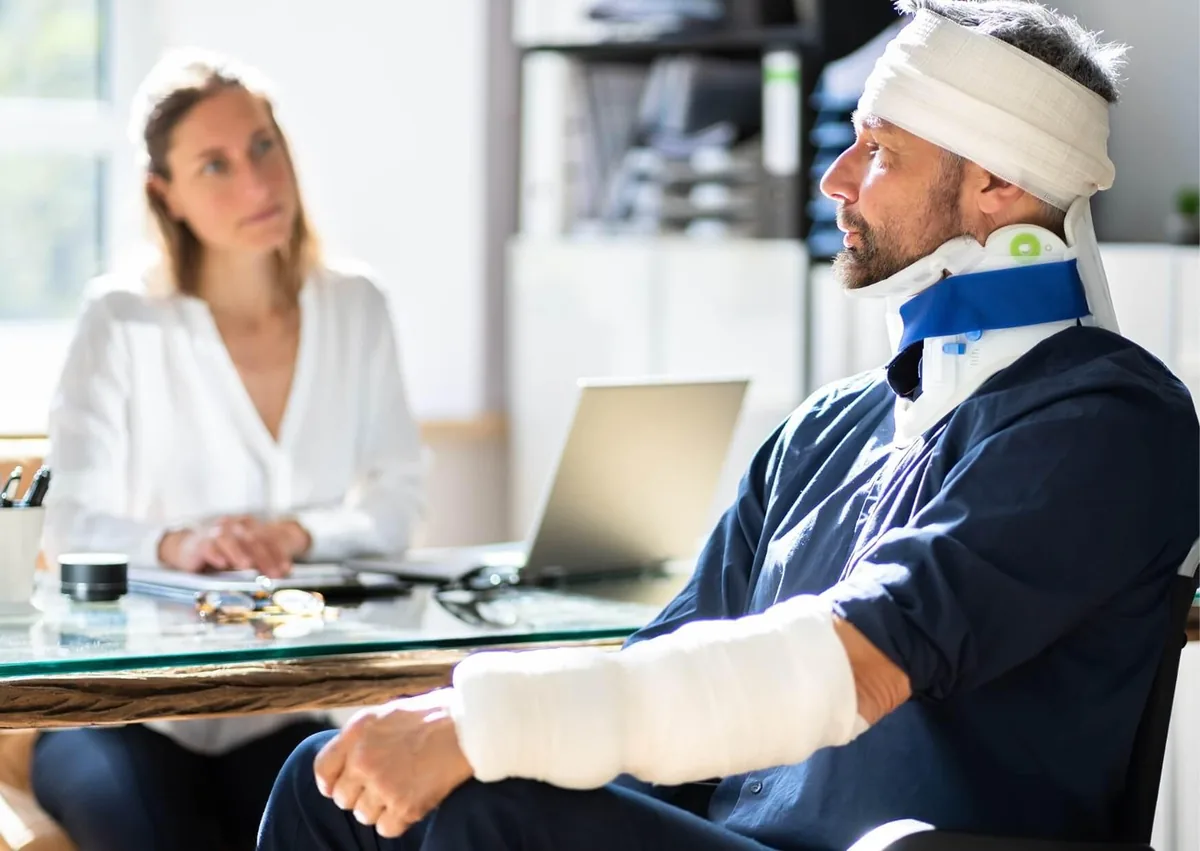
If you were hurt while doing roofing work in California, you may have a workers' compensation claim even if no one meant for the accident to happen. A roofing injury lawyer should also look at a second question early: whether someone other than your employer may share responsibility for the unsafe condition, equipment, property, or jobsite setup.
That distinction matters. Workers' comp can help with medical care, wage-loss benefits, permanent disability, job retraining benefits, and death benefits in covered cases. A separate third-party claim may be possible when another contractor, property owner, driver, equipment company, or other outside party helped cause the injury. The right path depends on what happened and what the evidence shows.
Roofing injuries often involve both workers' compensation issues and questions about construction site liability. LTHZ Law helps injured workers in Redding evaluate roofing accident claims, determine whether third-party liability may apply, and understand the legal options available after a workplace injury.
Roofing work puts people around heights, ladders, scaffolds, skylights, roof openings, sloped surfaces, tools, materials, heat, weather, and other crews. A fall from a roof is the obvious danger, but roofers can also be hurt by lifting, carrying, awkward footing, falling objects, power tools, equipment, vehicle access, and repeated strain.
OSHA's fall prevention campaign says falls are the leading cause of death in construction and notes that falls from ladders, scaffolds, and roofs can be prevented. For an injured worker, that does not automatically decide a legal claim. It does explain why the details of the jobsite matter so much after a roofing accident.
A roofing injury lawyer will often review who controlled the jobsite, whether proper fall protection was available, and whether another contractor, property owner, or equipment provider may share responsibility for the accident.
A roofing injury claim can come from one sudden accident or from work that gradually breaks down the body. The claim should describe the actual work being done, not just the final diagnosis.
If the injury involves a fall or unsafe walking surface, this related article on workplace slips and falls may help explain how small site details can become important. If a ladder was involved, see the guide on working safely on a ladder.
The first priority is medical care. If the injury is serious, get emergency treatment. Tell the doctor or emergency provider that the injury happened at work and describe every body part affected, even if one injury feels worse than the rest.
The next steps are usually practical:
The California Division of Workers' Compensation explains that an employer must provide or mail a claim form within one working day after learning about a work injury or illness. The DWC also says that filing the completed claim form starts the process for identifying benefits under state law.
If you are not sure what to do in the first few days, this guide on being injured at work in California gives a broader overview. This article on seeing a doctor after a work injury also explains why delays can create problems for both recovery and the claim record.
For many injured roofers, the first claim is a workers' compensation claim. California workers' comp is generally focused on benefits connected to the job injury. It is not the same as a civil lawsuit for pain and suffering against the employer.
Depending on the facts, workers' comp may involve medical treatment, temporary disability benefits while the worker cannot do the usual job, permanent disability benefits if the worker does not recover completely, supplemental job displacement benefits, and death benefits for dependents in fatal cases. The DWC's injured worker guidebook is a useful state overview of those basic rights and steps.
For a roofer, benefits may depend heavily on the medical record. A doctor may need to explain whether the worker can climb, lift, kneel, carry bundles, work at heights, use tools, drive, or return to a modified job. A vague note that only says "off work" may not answer enough questions if the insurance company disputes the claim or the employer offers light duty.
For a broader benefit overview, see LTHZ Law's guide on what benefits may be available through workers' compensation.
Safety details do not replace medical proof, but they can explain how the injury happened and whether another party may have been involved. They can also help answer questions if the carrier tries to blame the worker, call the accident unclear, or deny that the injury happened at work.
California has specific rules for residential-type roofing activities.
Title 8, Section 1731 says workers on residential-type roof surfaces must be protected from falls at 6 feet or more above the grade or level below, and it lists methods such as personal fall protection systems, scaffolding, safety nets, guardrails, or a compliant fall protection plan when conventional methods are infeasible. It also identifies training topics such as skylights, roof holes and openings, ladders, scaffolds, access to the roof, material placement, and fall protection systems.
Federal OSHA rules also address roofing work. The federal fall protection standard includes requirements for low-slope roofing, steep roofs, and residential construction at 6 feet or more above lower levels. OSHA's Fall Protection in Construction publication explains common systems such as guardrails, safety nets, personal fall arrest systems, warning lines, and safety monitoring systems.
For the claim, the important question is practical: what protection was actually there, whether it was usable, who controlled it, who trained the crew, and whether another company or site owner had responsibility for the condition that caused the fall.
A roofing accident may stay entirely in workers' comp, but some cases need a third-party review. Workers' comp usually applies between the worker and the employer. A third-party case asks whether someone outside that employer caused or contributed to the injury.
Examples can include a general contractor, property owner, subcontractor, equipment company, product manufacturer, delivery driver, or another trade on the site. California Labor Code section 3852 says an employee's workers' comp claim does not affect the employee's right of action against a person other than the employer for damages resulting from the injury or death.
There is also a different issue when an employer does not carry required workers' compensation insurance. The DWC FAQ explains that workers' compensation is the exclusive remedy only when the employer is properly insured. Labor Code section 3706 also addresses civil action against an employer that failed to secure payment of compensation. If this may apply, review LTHZ Law's page on an uninsured employer workers' comp claim.
This is one reason early legal review matters in roof cases. If the only claim opened is workers' comp, evidence for a possible third-party case can disappear before anyone asks for it.
"Roofing accident" is not a medical diagnosis. The case needs medical records that connect the work event or job duties to the injuries being claimed. A fall may cause several injuries at once, and some symptoms may show up later.
Roofing injury claims may involve:
The worker's job duties matter too. A restriction against climbing, lifting, kneeling, reaching, or working at heights may mean something very different for a roofer than for someone who works at a desk. The doctor should understand the actual physical work before writing restrictions or permanent impairment opinions.
Roofing claims can be disputed for several reasons. The claims administrator may question whether the injury happened at work, whether the worker was an employee or independent contractor, whether the medical report connects the diagnosis to the job, whether the worker reported the injury on time, or whether symptoms come from a prior condition.
A denial is not always the final word. The useful question is why the claim was denied. A causation dispute needs different evidence than a reporting dispute, a medical-treatment denial, a wage-loss dispute, or a disagreement over permanent disability. If the claim has already been rejected, see LTHZ Law's page on a denied workers' comp claim.
It can also help to talk with a workers' comp lawyer in California before giving up, signing settlement documents, or closing future medical care in a serious injury case.
You do not need a perfect file before asking for help. Bring what you have, and the lawyer can help identify what is missing.
For a serious fall, it is also worth saving the hard hat, harness, lanyard, ladder information, tool information, and any damaged personal items when possible. Do not repair, throw away, or return important equipment before asking whether it should be preserved.
Consider getting legal advice after a roofing injury if the accident involved a fall from height, a skylight or roof opening, a ladder or scaffold, a head injury, spinal symptoms, surgery, missed work, permanent restrictions, a denied claim, an uninsured employer, or a possible third-party defendant.
A serious roofing injury can affect your health, income, and future ability to work. If you were hurt in a roofing accident, LTHZ Law can evaluate your workers' compensation claim, determine whether a third-party claim may be available, and help protect your rights from the start.
Contact us to discuss your case and the legal options that may be available to you.
Yes, if the injury arose out of and occurred during work, a roofer may have a workers' comp claim. Workers' comp can apply even when fault is disputed, but the worker still needs medical evidence connecting the injury to the job.
Do not assume that a mistake ends the claim. California workers' comp is generally a no-fault system, though there are exceptions and disputes that can arise. The facts should be reviewed before you accept a denial or decide not to file.
Sometimes. A civil claim may be possible if someone other than your employer helped cause the injury, such as a property owner, general contractor, subcontractor, equipment company, driver, or product manufacturer. This is separate from the workers' comp claim and should be reviewed early.
That label does not always decide the issue. Some workers are misclassified. If you were treated like an employee, controlled by the company, or working as part of its regular roofing business, the classification question may need legal review.
If you are an employee with a California work injury, the DWC 1 claim form is usually how the workers' comp case is opened. The state says the employer must provide or mail the form within one working day after learning of the injury or illness.
Families may need to review workers' comp death benefits, possible third-party claims, jobsite evidence, and deadlines. A fatal fall or construction accident should be reviewed quickly because evidence and witness information can disappear.