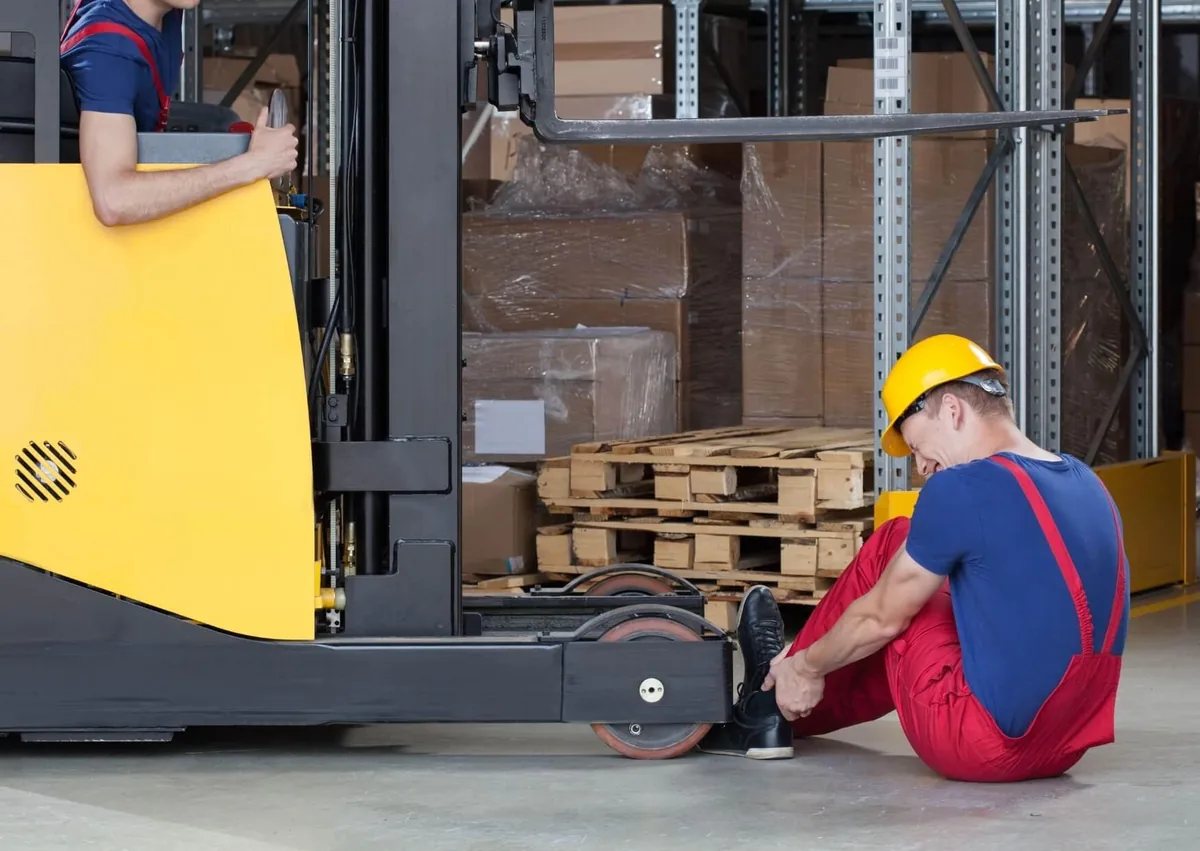
If you were injured in a workplace forklift accident, speaking with a forklift accident lawyer early can help you understand whether you have a workers' compensation claim and whether someone other than your employer may also be legally responsible. Forklift accidents can happen while operating the equipment, loading trailers, working in warehouses, or simply walking near active forklift traffic.
If the injury happened while you were performing your job or because of workplace conditions, California workers' compensation may cover medical treatment and wage-loss benefits. In more serious cases, it is also important to determine whether another contractor, property owner, maintenance company, or equipment manufacturer contributed to the accident.
LTHZ Law helps injured workers throughout California evaluate workers' compensation claims after serious workplace accidents, including forklift injuries. The firm also reviews whether a third-party claim should be investigated when the facts support additional legal options.
Forklifts are used in warehouses, retail stockrooms, construction sites, shipping yards, manufacturing plants, docks, and many other workplaces. They can injure the operator, a pedestrian, a spotter, a delivery driver, or another worker nearby.
Common forklift accidents include:
OSHA also notes that workers may be injured when forklifts drive off loading docks, fall between docks and unsecured trailers, strike nearby workers, or are used to elevate people improperly.
The injury may involve a back injury, neck injury, arm or hand injury, broken bones, crush injuries, amputations, burns, internal injuries, or a head or brain injury. In the worst cases, a forklift accident may involve a work-related death.
Seek medical care immediately if you experience:
Tell the medical provider that the injury happened at work and explain how the forklift accident occurred.
After urgent care is handled, report the injury at work and ask for the workers' compensation claim form. The California Division of Workers' Compensation tells injured workers to report job injuries right away. If you need follow-up treatment, make sure you know how to see a doctor after a work injury through the claim.
Do not rely only on a quick verbal report. Forklift accident details can change quickly after a shift ends. Equipment may be moved, pallets restacked, a trailer removed, a loading area cleaned, or video overwritten.
A forklift injury claim can turn on facts that are easy to lose. Save what you can safely, and write down details while they are fresh.
If you were hit as a pedestrian, note where you were standing or walking and whether there were painted lanes, mirrors, barriers, alarms, horns, spotters, blind corners, or stacked materials blocking the view. If the accident happened near a trailer or dock, it may also be useful to preserve details about wheel chocks, restraints, dock plates, trailer brakes, and who controlled the loading area.
Forklift injury claims often involve more than the accident itself. Training, supervision, maintenance, workplace traffic patterns, trailer restraints, and facility layout can all affect how the incident occurred.
OSHA's powered industrial truck standard covers design, maintenance, use, operator training, refresher training, and evaluation. OSHA training topics include visibility, load stability, vehicle capacity, vehicle stability, pedestrian traffic, narrow aisles, ramps, and other workplace conditions that affect safe operation.
California has its own industrial truck rules too. Cal/OSHA operator training rules cover truck-related and workplace-related topics, including visibility, load stability, pedestrian traffic, ramps, hazardous locations, and closed environments where exhaust can build up. Cal/OSHA industrial truck rules also address safe speed, clear travel direction, horns at obstructed views, forks kept low, and secure trucks or trailers before driving in and out of them.
Those rules do not automatically decide every injury claim. But they can point to records worth asking for, such as training files, evaluation dates, inspection checklists, maintenance logs, written operating rules, incident reports, and video.
If the forklift accident is work-related, California workers' compensation can include medical treatment, temporary disability benefits, permanent disability benefits, supplemental job displacement benefits, and death benefits. The benefits available depend on the injury, medical evidence, work restrictions, time away from work, and whether the injury results in permanent impairment.
Medical care may include emergency treatment, imaging, surgery, wound care, therapy, specialist visits, medication, prosthetics or durable medical equipment, and follow-up care. If you cannot work during recovery, temporary disability may become part of the claim. If the injury leaves permanent limits, permanent disability may need to be evaluated.
Forklift injuries can be serious because they often involve heavy equipment, tight spaces, moving loads, and crush forces. Do not settle a claim before you understand whether future care, permanent work restrictions, or other benefits may be involved.
Workers' compensation is usually the starting point when the injury happens at work. It may not be the only issue. California law can allow an injured worker to pursue damages against a person or company other than the employer when that third party helped cause the injury.
A forklift accident may need third-party review if the injury involved a defective truck, failed attachment, negligent maintenance contractor, unsafe property condition, another company controlling the dock or trailer, an outside delivery driver, a temporary staffing arrangement, or a contractor whose choices created the hazard.
A construction injury or dock accident may be especially important to screen because several companies may share the same site. Not every case has a third-party claim, but serious forklift injuries should be checked before equipment is repaired, video disappears, or contractor information is lost.
Some forklift injury claims are accepted quickly. Others are delayed, denied, or narrowed because the insurance company questions how the accident happened, whether all body parts are related, whether treatment is necessary, or whether the worker can return to modified duty.
The insurer may also argue that symptoms came from a prior condition, that the worker was not on the clock, that the injury was not reported quickly enough, or that the accident did not happen the way the worker described. These disputes do not end the case. They mean the medical record, witness evidence, video, and workplace documents need to be organized carefully.
If the claim is delayed, denied, or accepted only in part, review the denied workers' comp claim before deadlines pass. If the employer did not have workers' compensation insurance, an uninsured employer workers' comp claim may require a different plan.
It may be worth speaking with a lawyer if a forklift accident caused hospitalization, surgery, fractures, crush injuries, amputations, head trauma, permanent work restrictions, significant time away from work, or a denied workers' compensation claim.
Legal guidance is also important if another contractor, maintenance company, property owner, equipment manufacturer, or other third party may have contributed to the accident.
A California workers’ comp lawyer can help evaluate your claim, review the medical evidence, and determine whether a third-party claim should also be investigated. LTHZ Law represents injured workers throughout California and works to protect their rights from the earliest stages of a claim.
If you were injured in a forklift accident at work, contact our firm to discuss your case and learn how an experienced forklift accident lawyer can help protect your interests and pursue every available source of compensation.
Yes. If the forklift accident happened while you were working or because of workplace conditions, it may be covered by workers' compensation. This can apply to forklift operators, pedestrians, warehouse workers, dock workers, drivers, and other employees hurt nearby.
A pedestrian forklift injury can still be a work injury. Save details about where you were walking, whether there were marked lanes or barriers, whether the operator sounded the horn, whether visibility was blocked, and who saw the accident.
Training may matter. OSHA and Cal/OSHA both address powered industrial truck training and evaluation. Lack of training, missing refresher training after a prior incident, or authorization for the wrong type of truck may become important evidence.
Workers' compensation is usually the main claim against the employer. A separate third-party claim may be possible if someone other than the employer contributed to the accident, such as a contractor, property owner, maintenance company, manufacturer, or outside driver.
Video can help, but it is not the only evidence. Medical records, witness statements, photos, incident reports, training records, maintenance logs, inspection sheets, and the timing of symptoms may still support the claim.
Bring medical records, claim forms, photos, witness names, incident reports, work restrictions, text messages, emails, the forklift or dock details, and any information about training, maintenance, video, trailer restraint, load stability, or prior safety complaints.