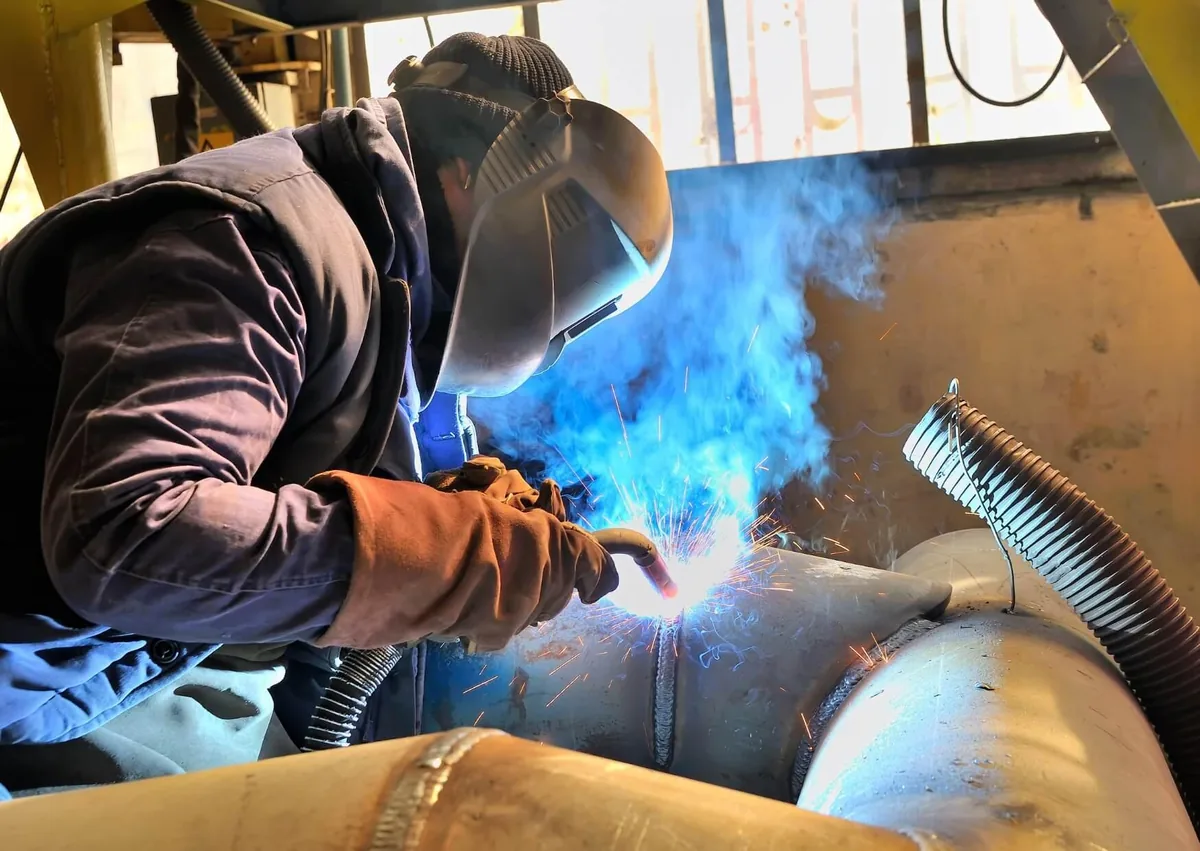
If you were hurt on the job, a welding accident lawyer can help determine whether you have a workers' compensation claim and whether another party may also share responsibility for the unsafe conditions, equipment, or jobsite that caused the injury. A welding accident may involve burns, eye injuries, fume exposure, electric shock, falls, or other serious injuries that happen while performing work duties.
In California, workers' compensation may cover medical care and wage-loss benefits after a welding injury. Serious cases should also be checked for a possible claim against someone other than the employer, such as an equipment manufacturer, another contractor, or a property owner.
LTHZ Law helps injured workers throughout Redding and Northern California understand their workers' compensation rights after welding accidents. When appropriate, we also evaluate whether another party may share legal responsibility for the injury, helping employees understand all available options.
Welding injuries are not limited to one kind of accident. Some happen in a single moment, such as a flash burn, flame burn, shock, explosion, or fall. Others develop after repeated exposure to fumes, gases, noise, awkward positions, or work in confined spaces.
Common welding injuries include:
On construction sites, welding accidents may also involve scaffolds, ladders, lifts, trenches, cranes, or multiple contractors working in the same area.
If symptoms started at work, tell the doctor exactly what happened. For fume or gas exposure, also explain what you were welding, whether the metal was coated, whether you were in a confined or poorly ventilated space, and whether anyone else felt sick.
Welding cases often turn on facts that can disappear quickly. The jobsite may be cleaned, equipment may be repaired, a cable may be replaced, a respirator may be thrown away, or a contractor may leave the site before anyone asks questions.
Those details matter because welding can involve heat, sparks, ultraviolet radiation, toxic coatings, smoke, gases, fire risks, and electric shock.
OSHA identifies welding hazards that include fumes, ultraviolet radiation, burns, eye injuries, electric shock, cuts, and crush injuries. OSHA standards also address fire prevention, ventilation, eye protection, and confined-space safety.
California rules can matter too. For example, Cal/OSHA construction welding ventilation rules address ventilation during welding, brazing, and cutting, while Cal/OSHA rules for coated metals address welding, cutting, or heating materials with coatings that may be flammable or toxic.
Get medical care first, especially for eye pain, burns, breathing trouble, chest symptoms, dizziness, confusion, fainting, electric shock, or any injury that may involve the face, lungs, head, spine, hands, or major joints. If the injury may involve fumes or gases, move to fresh air and get medical help right away.
Tell the medical provider the injury happened at work and describe the welding task in plain language. If symptoms involve your eyes or breathing, mention the exact timing. Delays can make it harder to connect the symptoms to the workplace exposure.
After urgent medical needs are handled, report the injury at work and ask for the workers' compensation claim form. The California Division of Workers' Compensation advises employees to report work injuries right away, and to report work-related illnesses as soon as they learn or believe the illness was caused by work.
A welding injury claim is usually stronger when the medical record and jobsite facts line up. Save what you can without putting yourself in danger or violating workplace rules.
For fumes, gases, or coated metals, keep notes while the details are fresh. Write down the smell, smoke, metal type, coating, ventilation, respirator use, length of exposure, and whether symptoms improved after leaving the area.
If the injury or illness is work-related, California workers' compensation can include medical treatment, temporary disability benefits, permanent disability benefits, supplemental job displacement benefits, and death benefits. Which workers' compensation benefits apply depends on the medical evidence, work restrictions, time off work, and whether the injury leaves lasting impairment.
Depending on the injury, treatment may include:
If a worker dies after a welding explosion, fire, confined-space exposure, or other severe jobsite incident, the family may need to review death benefits and any separate third-party issues before evidence is lost.
Workers' compensation is usually the starting point when a worker is hurt on the job. It does not always answer every legal question. A separate third-party claim may need to be reviewed if someone other than the employer helped cause the injury.
Examples can include defective welding equipment, failed PPE, a negligent subcontractor, unsafe premises controlled by another company, a gas cylinder issue, a general contractor's site-safety failure, or work around a tank, coating, or chemical hazard that was not properly disclosed.
Not every welding accident has a third-party case. The point is to check early, while photos, equipment, witness names, permits, inspection records, and contractor information are still available.
Some welding claims are accepted quickly. Others are delayed or narrowed because the insurance company questions how the injury happened, whether symptoms came from work, or how serious the condition is.
Fume and illness claims can be especially disputed because symptoms may overlap with the flu, asthma, allergies, anxiety, smoking history, infection, or another medical condition. The CDC/NIOSH welding fumes guide lists several possible symptoms and target organs, including the eyes, skin, respiratory system, and central nervous system. That does not prove a particular claim by itself, but it shows why medical timing, exposure facts, and jobsite evidence matter.
If the claim is denied, delayed, or accepted only in part, review the denied workers' comp claim before deadlines pass. If the employer did not have workers' compensation insurance, an uninsured employer workers' comp claim may require a different plan.
It may be worth speaking with a lawyer if a workplace welding injury resulted in hospitalization, surgery, time away from work, serious burns, eye injuries, lung or neurological symptoms, electric shock, permanent work restrictions, or a denied workers' compensation claim.
Legal guidance may also be important when multiple companies were involved at the jobsite or when defective equipment, inadequate ventilation, PPE, or hazardous materials may have contributed to what happened.
Early legal guidance can help protect important evidence and identify every available path to recovery. LTHZ Law helps employees evaluate workers' compensation claims, review medical evidence, and determine whether a third-party claim should also be pursued.
Contact our firm to discuss your welding injury and better understand your legal rights and options.
Yes. If the burn happened while you were working or because of workplace conditions, it may be covered by workers' compensation. The claim may include medical care, time-loss benefits if you cannot work, and evaluation for any lasting impairment.
They can. Welding fumes, gases, or coated-metal exposure may support a work illness claim when the medical evidence and workplace facts connect the condition to the job. These claims often need careful documentation because symptoms can overlap with other health problems.
Eye pain after welding should be taken seriously, especially if there is light sensitivity, blurred vision, redness, tearing, or the feeling that something is in the eye. Get medical care and explain that the symptoms started after welding or being near welding.
Workers' compensation is usually the main claim against an employer for a job injury. A separate lawsuit may be possible against a third party, such as another contractor, equipment manufacturer, property owner, or other outside party, depending on what caused the accident.
Do not assume the label ends the case. Work status can be disputed, and the facts of the job may matter. If you were hurt while welding for a company or on a jobsite, speak with a lawyer before accepting that you have no workers' compensation rights.
Bring medical records, claim forms, photos, witness names, texts or emails, incident reports, equipment details, PPE photos, the names of contractors on site, and any information about fumes, coated metal, ventilation, confined spaces, or defective equipment.