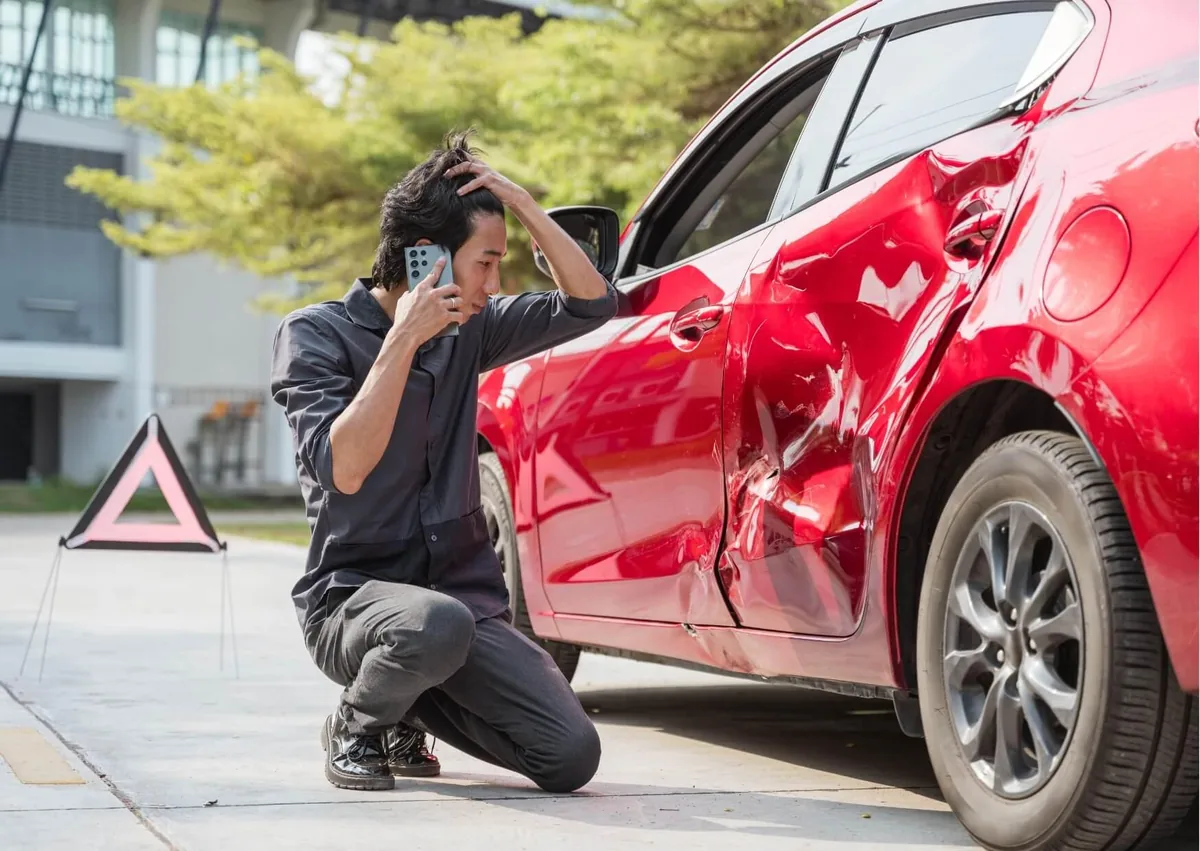
If you were involved in an accident while driving your personal vehicle for work, you may still qualify for California workers' compensation benefits. Whether the vehicle belongs to you is often less important than whether you were performing a work-related task at the time of the crash.
In California, an accident while driving your personal vehicle for work may still be considered a work-related injury if the trip served your employer's interests. Questions about auto insurance, vehicle damage, mileage reimbursement, and proof of the work purpose can make these claims more complicated, but they do not automatically prevent workers' compensation coverage.
LTHZ Law helps California employees evaluate workers' compensation claims involving work-related vehicle accidents, including crashes that occur while using a personal vehicle for work. Understanding how these claims are evaluated can help injured workers protect their rights and identify the benefits that may be available.
California's Division of Workers' Compensation explains that workers' compensation can apply to a work-related injury, including getting hurt in a car accident while making deliveries. That example matters because many workers are not in a company truck when they are hurt. They may be using a personal vehicle because the job requires travel, because a supervisor asked them to run an errand, or because they regularly drive between job locations.
The harder question is usually whether you were doing something for work at the time of the crash. A normal commute to or from a fixed workplace may be treated differently than a trip between worksites, a customer visit, a delivery, a supply run, or a special errand requested by the employer. Travel rules can be fact-specific, and small details can change how a claim is viewed.
For a broader overview of vehicle crashes on the job, see LTHZ's page on work-related motor vehicle accident claims and the related article on what to do after a car accident while driving for work. This article focuses on the extra issues that come up when the car belongs to you.
Whether an accident while driving your personal vehicle for work qualifies for workers' compensation depends on the purpose of the trip. The following situations are commonly treated as work-related when supported by the facts.
Examples may include:
California's official work-relatedness rule for injury recordkeeping says that travel-status injuries can be work-related when the employee was engaged in work activities "in the interest of the employer," while personal detours and some commuting situations are treated differently. That rule is not the whole workers' compensation analysis, but it is a useful way to organize the facts: where were you going, why were you going there, who asked you to go, and what part of the trip was for work?
When an accident involves your personal vehicle, more than one insurance or legal issue may apply. Separating each issue early can make it easier to understand what benefits or claims may be available.
If the crash happened while you were doing your job, your injury claim may belong in the workers' compensation system. That can involve medical treatment, temporary disability benefits if you cannot work, permanent disability benefits if the injury leaves lasting impairment, and other benefits depending on the case. LTHZ has a separate guide to workers' compensation benefits.
Workers' compensation usually focuses on injury benefits, not simply fixing the car. If your personal vehicle was damaged during a required work task, there may also be auto-insurance, reimbursement, or wage-and-expense issues. California Labor Code section 2802 says an employer must indemnify an employee for necessary expenditures or losses incurred as a direct consequence of job duties or employer directions. How that applies to a vehicle accident depends on the facts, the records, and the type of loss being claimed.
If another driver caused the crash, you may have a separate claim against that driver or their insurer. California Labor Code section 3852 says a workers' compensation claim does not wipe out an injured employee's right of action against someone other than the employer. That can matter because a third-party auto claim may address damages that are different from workers' compensation benefits.
Your auto insurer may ask whether you were using the car for business. Some policies treat work use differently from personal use, and some insurers may raise coverage questions after a crash. Do not guess your way through recorded statements or forms if the facts are complicated. Keep the claim numbers and letters from every insurer involved, and make sure your work injury is reported through the proper workers' compensation channel as well.
After an accident while driving your personal vehicle for work, it is easy to focus on the auto insurance claim first. However, you should also take the steps needed to protect a potential workers' compensation claim.
The DWC's claim page says filing a claim form helps protect your rights and starts the workers' compensation process. It also explains that an employer must provide the form within one working day after learning about the injury or illness. LTHZ's guide to filing a workers' compensation claim explains more about that process.
California's DMV also requires an SR-1 report within 10 days if a California traffic accident involves an injury, death, or property damage over $1,000. The DMV says that report is required in addition to any report made to police, CHP, or an insurance company. That is separate from the workers' compensation claim, so do not assume one report replaces the other.
Claims involving an accident while driving your personal vehicle for work often depend on documentation showing that the trip served a work purpose. Useful records may include:
These records can be especially important if the employer later says the trip was personal, the workers' compensation carrier says you were commuting, or the auto insurer says the car was being used for business.
Some disputes are predictable. An insurer may argue that you were off the clock, on a personal errand, taking an unreasonable detour, or simply commuting. An employer may say the trip was not authorized. A personal auto insurer may ask whether you used the vehicle for deliveries, rideshare, sales calls, or other business activity. A workers' compensation carrier may accept that a crash occurred but dispute whether all of the claimed injuries are related to it.
Medical timing also matters. If you wait too long to get care, the insurance company may argue that your symptoms came from something else. If you were sore after the crash but thought it would pass, read LTHZ's guide on how long you have to see a doctor after a work injury.
If the claim is denied or benefits are delayed, the next step is not to keep repeating the same story to different adjusters. It may be time to review the denial, the travel facts, the medical records, and the insurance documents together. LTHZ has more information on denied workers' comp claim issues.
Personal-vehicle crashes can involve more than soreness and repair bills. Neck injuries, back injuries, head injuries, broken bones, nerve symptoms, and psychological trauma can affect work for weeks, months, or longer. In fatal crashes, families may also need to understand whether work-related death benefits or third-party claims may apply.
Do not assume that using your own vehicle makes the crash a personal matter. If you were driving for a work-related purpose, the accident may still qualify for workers' compensation benefits. The question is not just where the car title is kept. It is what you were doing, why you were doing it, and how the crash changed your health and ability to work.
Consider speaking with a workers' comp lawyer in California if any of these are happening:
LTHZ Law represents injured workers throughout California and can evaluate the facts of your case, explain your legal options, and help protect your rights. Contact our firm to discuss your accident and learn what steps to take next.
Yes. In California, an accident while driving your personal vehicle for work may qualify for workers' compensation if you were performing job-related duties or acting in your employer's interests when the crash occurred.
Workers' compensation generally covers work-related injuries rather than vehicle repairs. Depending on the circumstances, you may also have rights under your auto insurance policy or reimbursement provisions such as California Labor Code Section 2802.
You may still be eligible for workers' compensation benefits while also pursuing a third-party claim against the at-fault driver. These claims are separate and may provide different types of compensation.
Seek medical care if needed, report the injury to your employer as soon as possible, complete a DWC-1 claim form if you were injured, and keep records such as police reports, medical records, photos, and documentation showing the trip was work-related.
Evidence such as work schedules, emails, text messages, delivery logs, mileage records, calendar entries, expense reports, and witness statements can help show that you were driving for a work-related purpose when the accident occurred.